
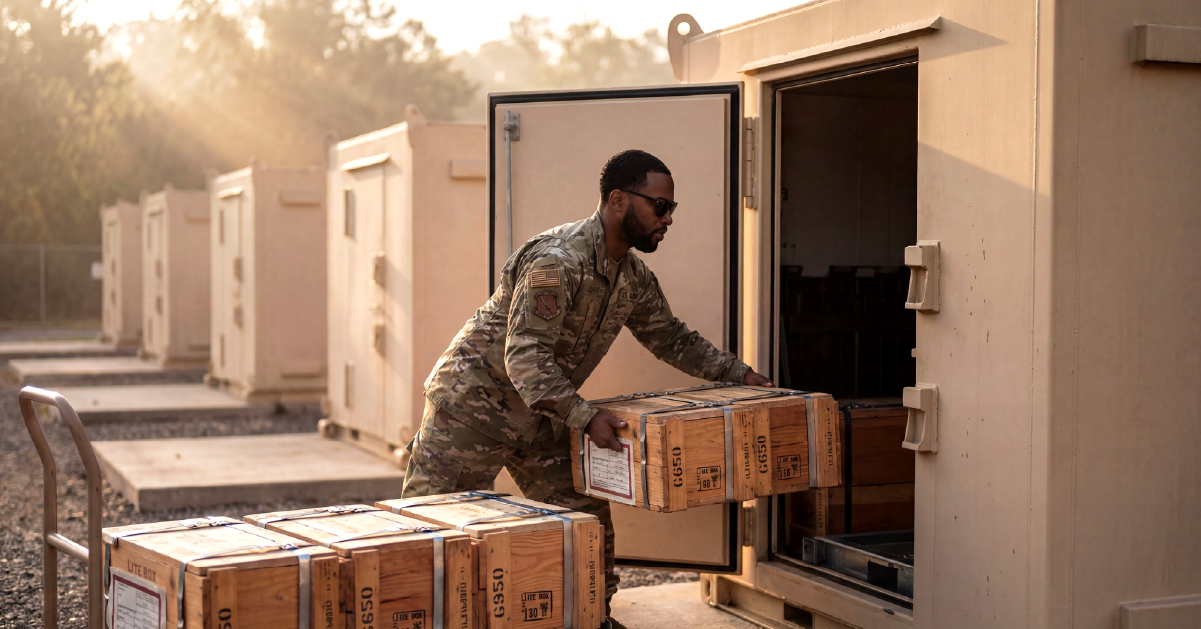
There are many kinds of organizations that could be responsible for storing ammunition and explosive materials. Military organizations, law enforcement agencies, defense contractors, and many more routinely evaluate ammunition and explosive storage requirements. In any industry, there are a number of factors that must be considered when evaluating ammunition storage magazines. Compliance requirements, security considerations, operational needs, site constraints, and future growth can all influence the decision-making process.
Those requirements may also change over time. New programs, evolving mission objectives, changing inventories, and facility expansion can create storage needs that differ significantly from those identified during the initial planning process.
Storage requirements are not always static. Organizations may experience changes in inventory levels, mission objectives, facility operations, or regulatory requirements that affect how ammunition and explosive materials are stored.
In some cases, a new program or facility may create additional storage needs. In others, temporary operational requirements may require storage capacity that wasn’t anticipated during the original planning process. Even organizations with well-established storage programs may find that their requirements evolve over time.
These changes can create challenges when storage solutions are selected based solely on current needs. Evaluating both immediate and long-term requirements during the planning process can help organizations better prepare for future operational demands and reduce the likelihood of needing significant changes later.
One of the best ways to support both current and future operational requirements is by leaning on modular or deployable magazines.
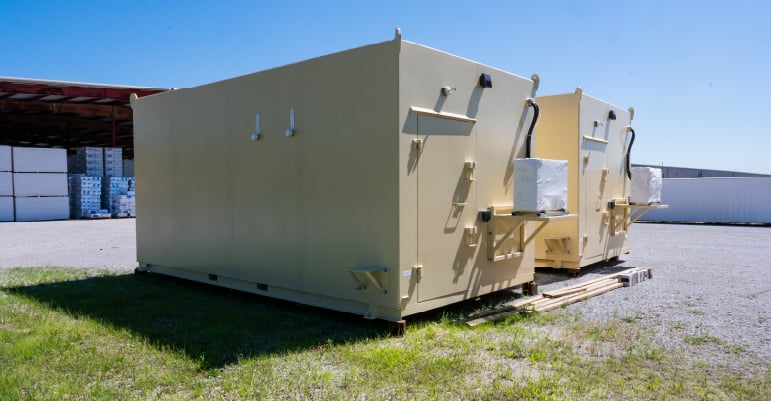 A primary advantage in modular is standardized manufacturing. Consistent manufacturing processes can help provide predictable quality, repeatability, and consistency across projects. For organizations managing multiple facilities or planning future expansion, standardized solutions can simplify planning and help ensure storage facilities are built to the same requirements. An example would be if ammunition requirements were reduced at one location, and increased at another, a standard module could go seamlessly from one location to the other.
Modular magazine solutions may also offer flexibility as operational needs change. Organizations can evaluate configurations that align with current storage requirements while maintaining the ability to expand or modify storage capacity in the future.
These solutions are available in a range of configurations, from smaller standalone magazines to large multi-section facilities. This allows organizations to select a solution that aligns with their operational needs while maintaining the ability to adapt as requirements evolve.
Operational flexibility is important, but it is only one factor organizations must consider when evaluating ammunition and explosive storage solutions. Compliance requirements, physical security considerations, and site-specific factors also play an important role in the planning process.
Depending on the organization and application, a variety of regulations, specifications, and guidance documents will influence storage requirements. For some Department of Defense entities, their requirements are related to the physical security of Arms, Ammunition, and Explosives (AA&E). For the US Navy, there are specific ammunition requirements. Still other organizations may follow the ATF explosives storage requirements.
Because requirements can vary significantly depending on the materials being stored, the organization involved, and the intended use of the facility, compliance considerations should be addressed early in the planning process. Doing so can help organizations identify applicable requirements, evaluate site-specific constraints, and avoid costly modifications later in a project. Successful planning often involves balancing compliance, security, operational needs, and long-term flexibility to arrive at a solution that supports both current and future objectives.
While standardized manufacturing offers consistency and repeatability, organizations often have unique operational requirements that influence how a magazine is configured. As a result, customization is frequently part of the planning process.
The specific requirements for a military installation may differ significantly from those of a law enforcement agency, training facility, defense contractor, or industrial operation. Storage capacity, access requirements, security considerations, and day-to-day operational needs can all influence the final configuration.
Common customization options may include intrusion detection systems, shelving, weapons racks, HVAC systems, lighting, and other mission-specific features. The goal is not simply to add features, but to create a storage environment that supports how the facility will actually be used.
By evaluating operational requirements early in the planning process, organizations can better ensure that a magazine solution aligns with both current needs and long-term objectives.
Many storage-related challenges can be traced back to decisions made during the early planning stages of a project. While it is important to address immediate operational requirements, organizations should also consider how those requirements may change over time.
Anticipating future growth is one of the most important parts of the planning process. Changes in inventory levels, mission objectives, facility operations, or organizational priorities can create storage needs that differ from those originally identified. Planning for potential growth can help organizations avoid situations where storage capacity becomes a limiting factor.
Long-term operational requirements deserve similar consideration. A storage solution that meets today's needs may not fully support future objectives if expansion, reconfiguration, or changing operational demands aren’t taken into account. Evaluating these possibilities early can help organizations make more informed decisions and reduce the likelihood of significant modifications later.
By considering both current and future requirements, organizations can develop a storage strategy that supports operational flexibility, compliance objectives, and long-term mission success.
If you are evaluating ammunition or explosive storage requirements for a new project, facility expansion, or evolving operational needs, the CoverSix team can help you explore available options and identify a solution that supports your objectives. Contact us today